Galápagos: Snorkeling pt. II

Enjoy this compilation of videos from our time snorkeling! We snorkeled almost everyday, and I would do it again in a heartbeat.

Galápagos: Isla Santa Fe
*cover photo by Athene Blakeman.
Our next stop on Day 2 was Barrington Bay, a beautiful little bay on the coast of Santa Fe Island. As soon as we entered the bay on the pangas, we were greeted by a group of sting rays!

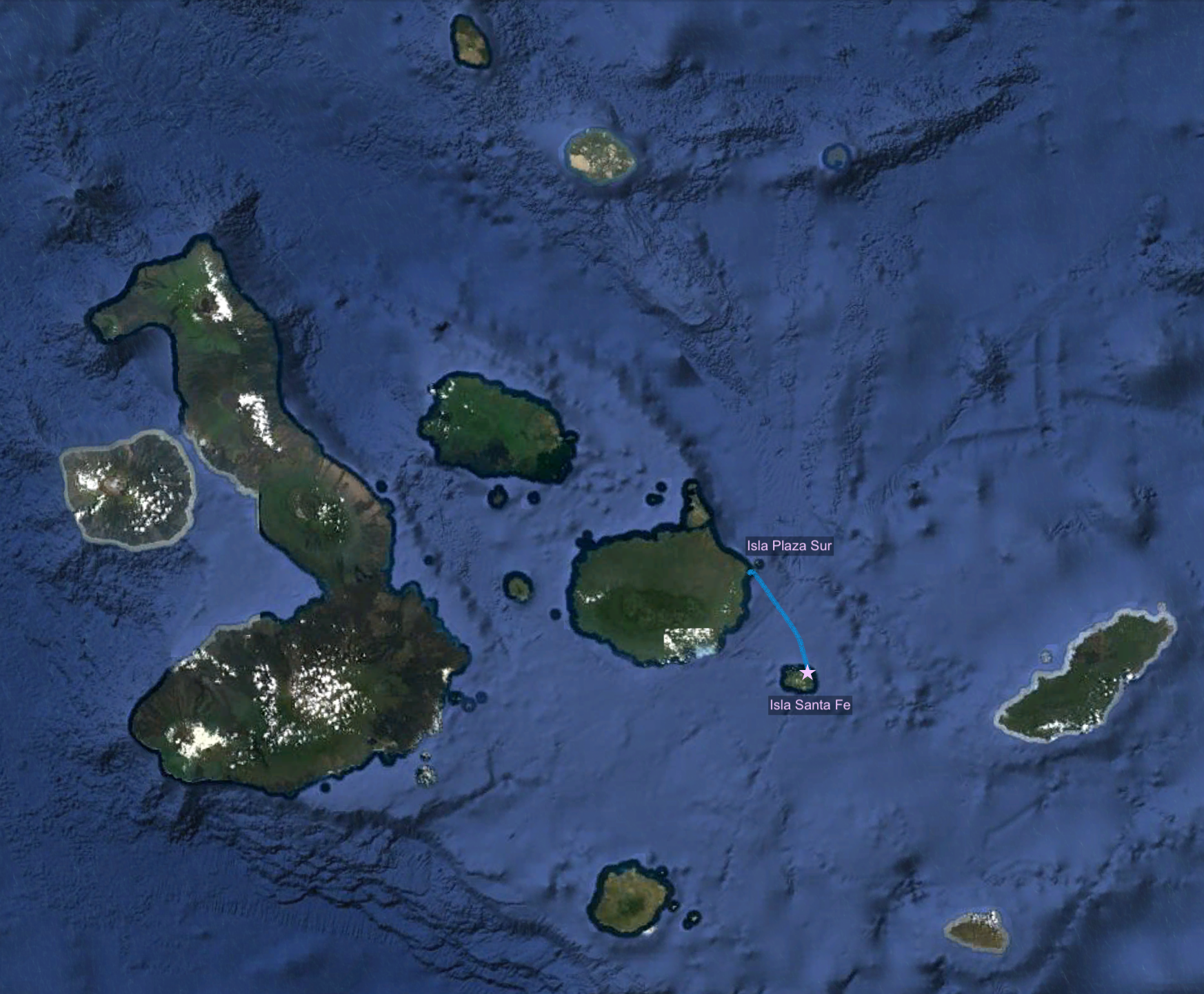

The Archipel II centers the frame!
The best part about Barrington Bay was its huge colony of endangered Galápagos sea lions (Zalophus wollebaeki). As soon as we got there, a curious and territorial male began parking at us from across the beach, running in and out of the water and swimming back and forth. There were also so many sea lion pups!

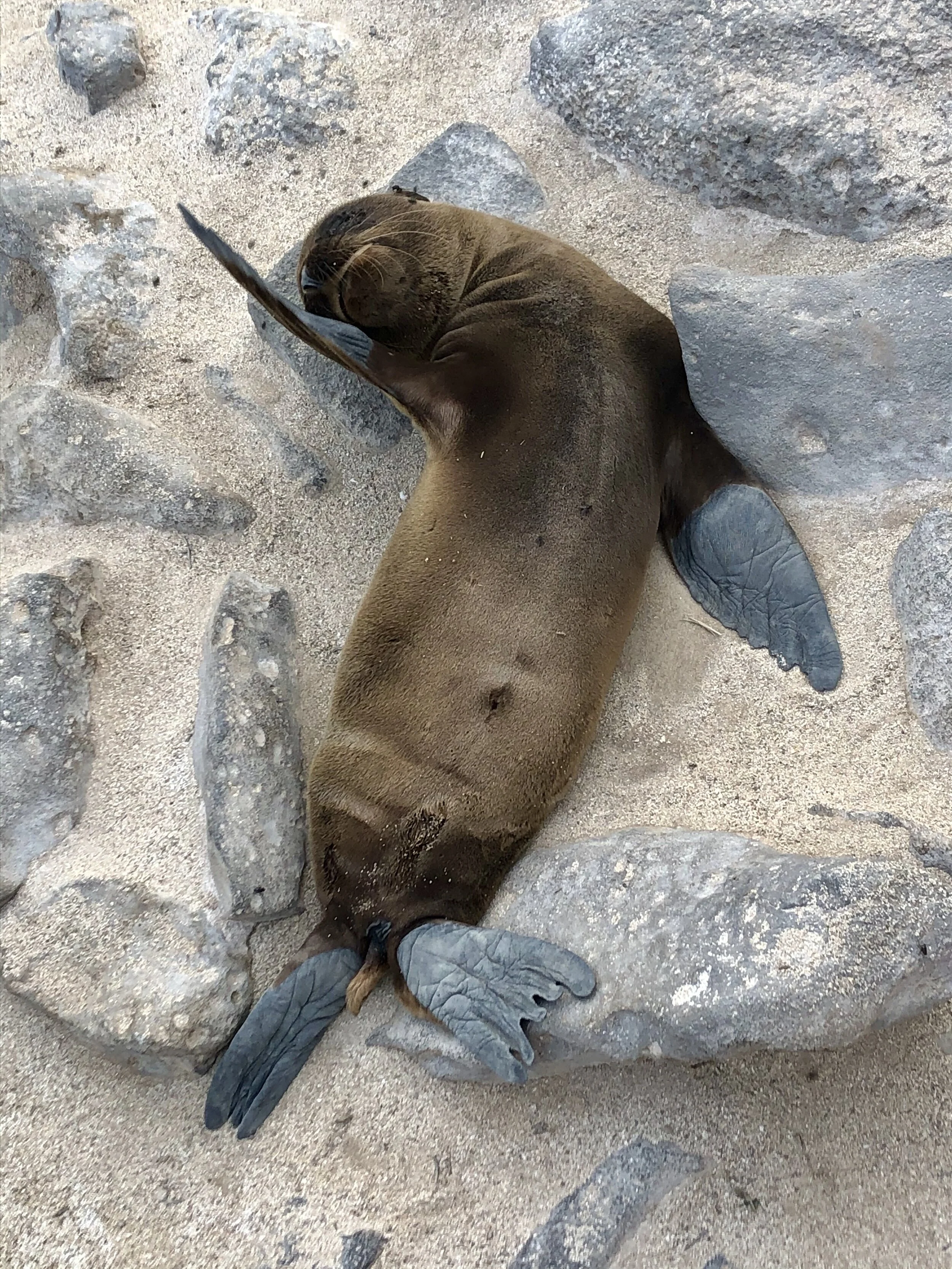
A word about how close I seem to be to the pup: We were instructed to maintain a 2m radius around the animals. Despite our diligence, sometimes animals were unavoidably close. This sea lion and many others nearby were parked right in the middle of the walking path. They didn’t seem to mind our presence (which is another fascinating side note about the Galápagos wildlife - they allow such close proximity in large part due to their lack of predators), so we carefully did our best to circumvent them. And camera zoom helps a lot too.
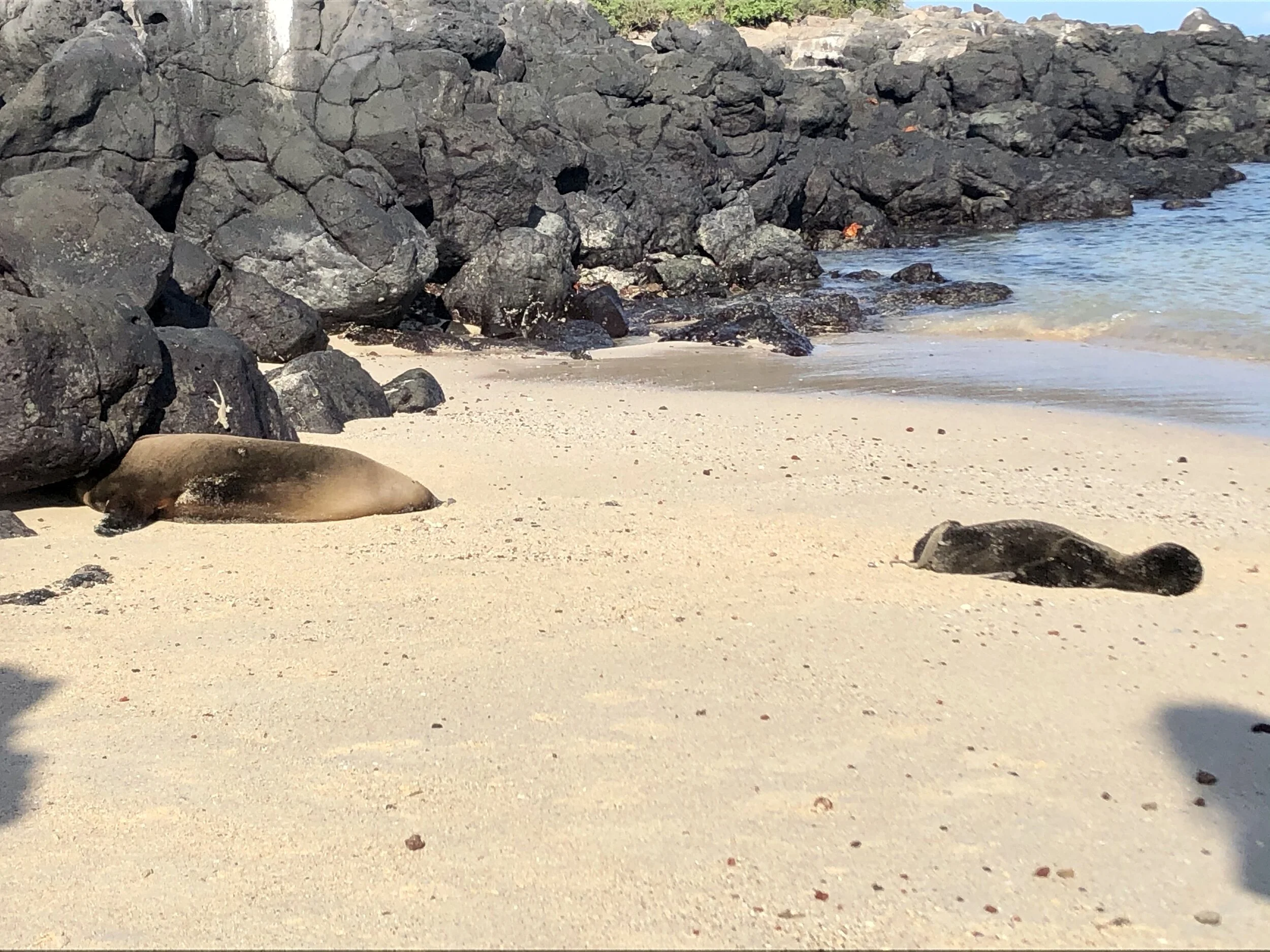
See the lizard on the baby sea lion to the right and another lizard on a rock above the adult sea lion to the left? As these sea lions sleep and lounge, they are ravaged by flies. The lava lizard is a mutualist with the sea lions (and other creatures), whereby lizards hop up on top of the sea lions and catch flies, so it’s not uncommon sight to see so many lava lizards nearby sleeping lions.


Getting some use out of my new Moment macro lens for my iPhone.


Lava lizard! I made friends with this one. Flies were swarming on me and as I swatted them, the lava lizard would immediately pluck them from the ground. I was closely watched.

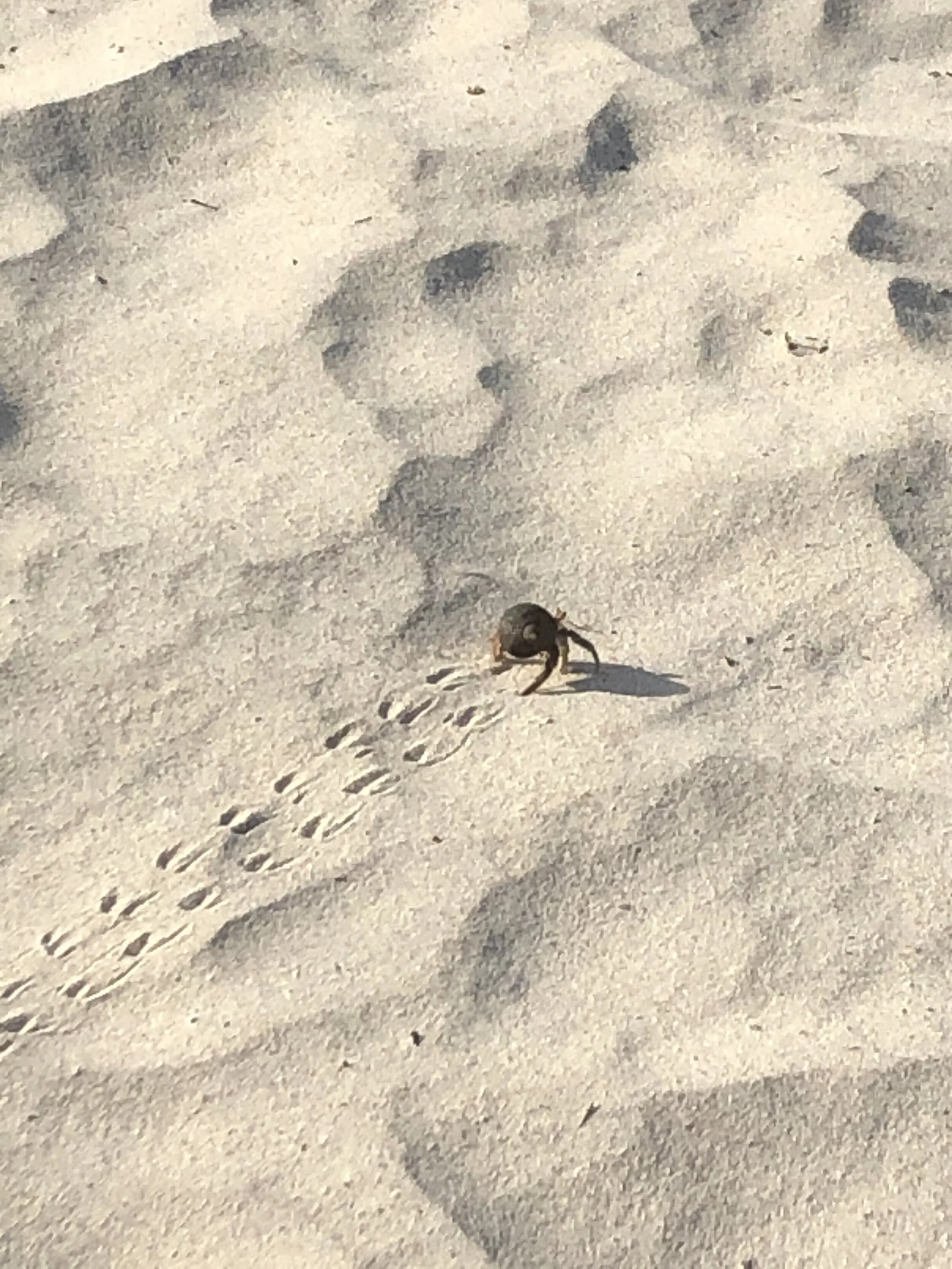
Hermit crab! I love the pattern it makes in the sand.

At the end of the day, coming back onto the boat with these guys was a treat. Our brilliant naturalist guide, Paola, is 2nd to right. (And she’s starting a PhD program at Arizona State this fall!)
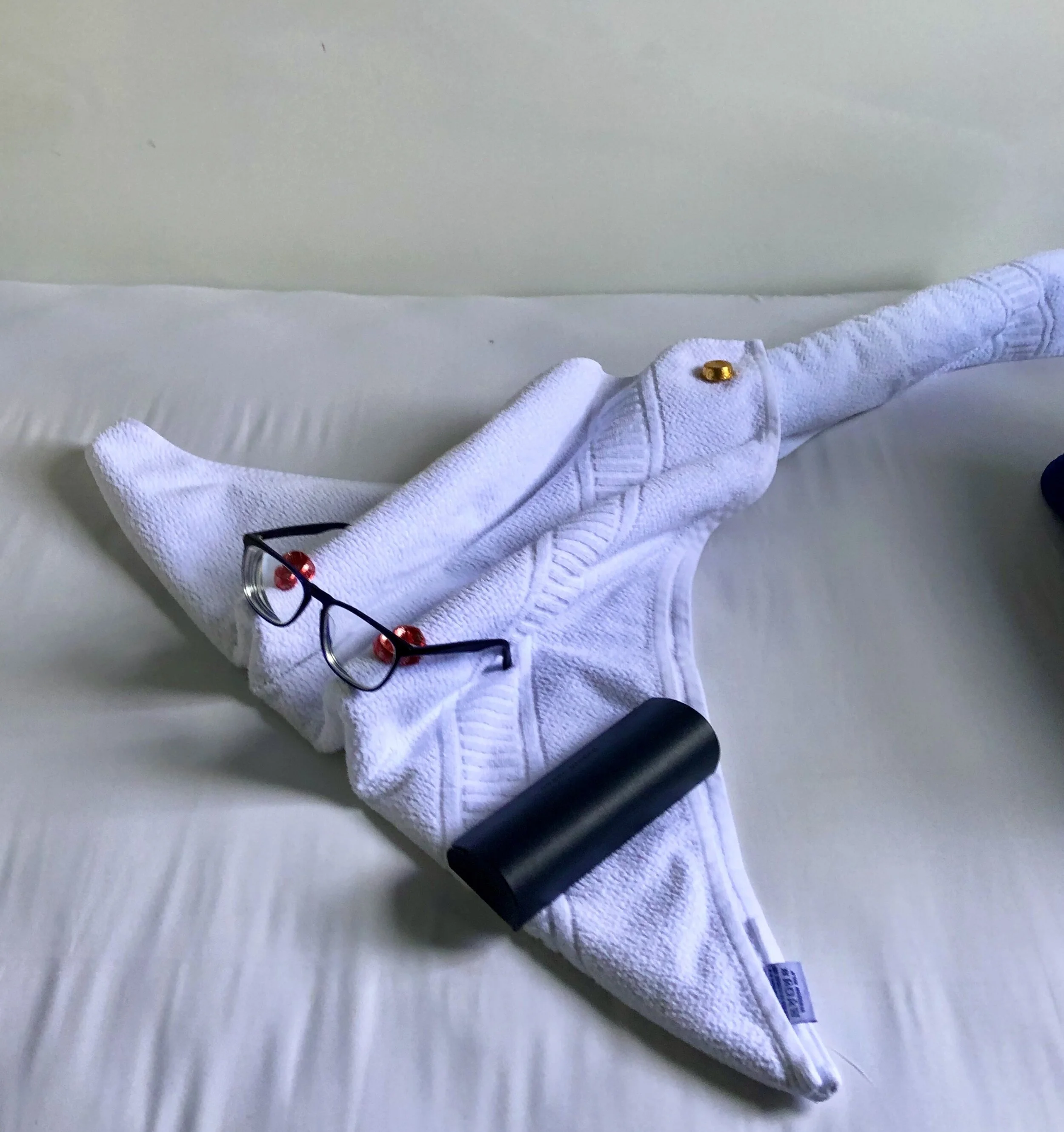
Because I would find things like this on my bed — a ray with my glasses and little chocolates for eyes.
It doesn’t get much better than this.

Galápagos: Isla Plaza Sur
Isla Plaza Sur, Isla Santa Cruz
On the second day, we traveled from Isla San Cristóbal to Isla Plaza Sur, a small island off the coast of the larger Isla Santa Cruz (there is also an Isla Plaza Norte, but it’s off-limits to humans).
Each day began with a nearby walk. We would hop on the pangas (aka “little boats” in Spanish, another word for a dinghy), and zoom up to a beach or a rocky outcrop, and then spend an hour or more roaming the island with Paola as our guide. I tried to write down as much as I possibly could to varying degrees of success.
The Galápagos are a series of volcanic islands, and the islands in the west of the archipelago are younger than the islands to the east. The Galápagos are relatively young, geologically speaking, arising around 5 million years ago. As species from the mainland began to colonize the different islands by air or by sea, populations diverged from their ancestral groups. Some of the western-most islands, which have the most volcanic activity, may be only hundreds of thousands of years old. As islands formed, animals and plants continued to move westward. Many of the species on each island are closely related to others in the Galápagos, but they have subtle differences.
(click on the below maps to make them bigger)


Land iguana (Conolophus subcristatus). This small island of Isla Plaza Sur is one of the best places in all of the Galápagos to see land iguanas.

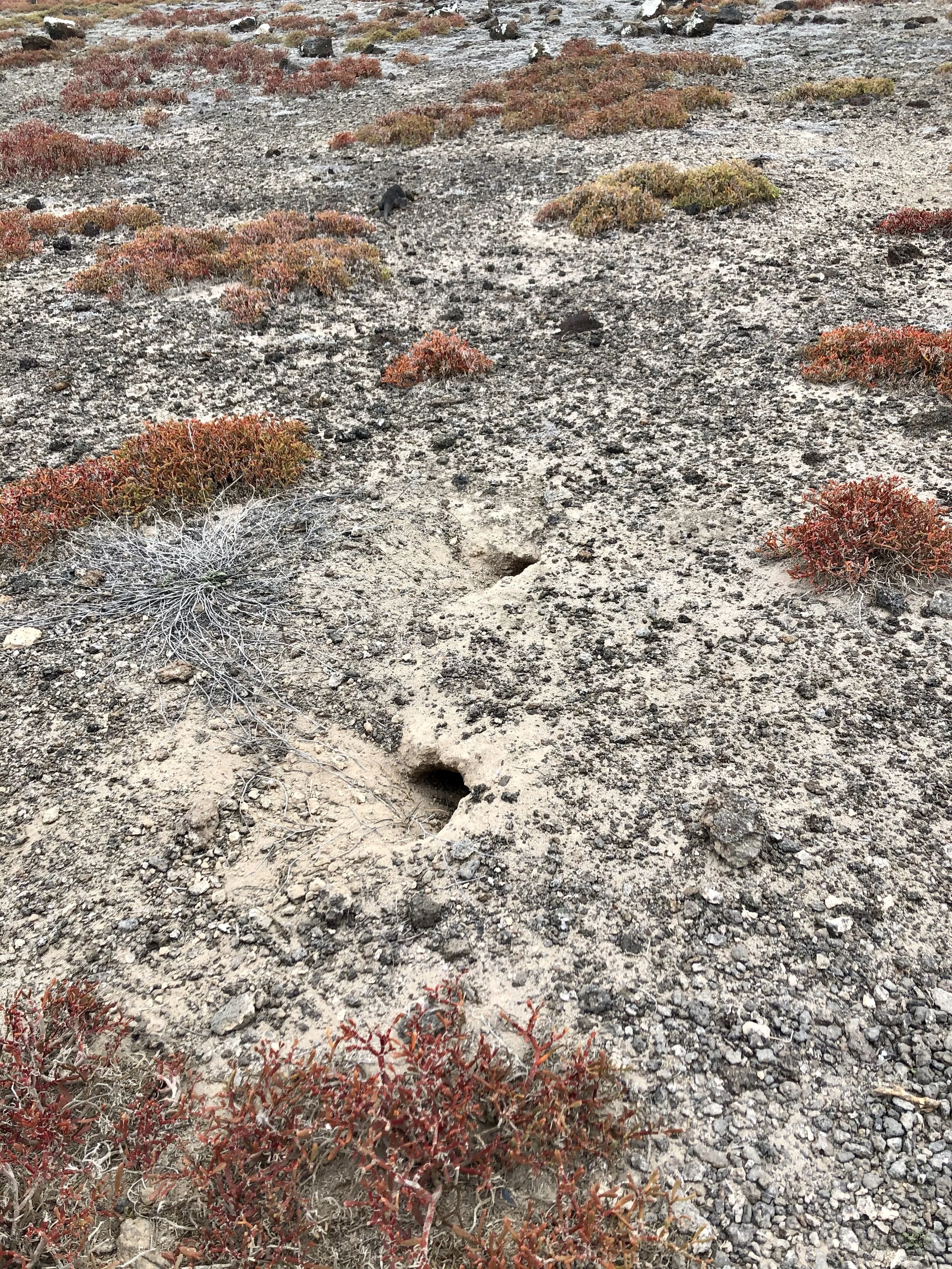

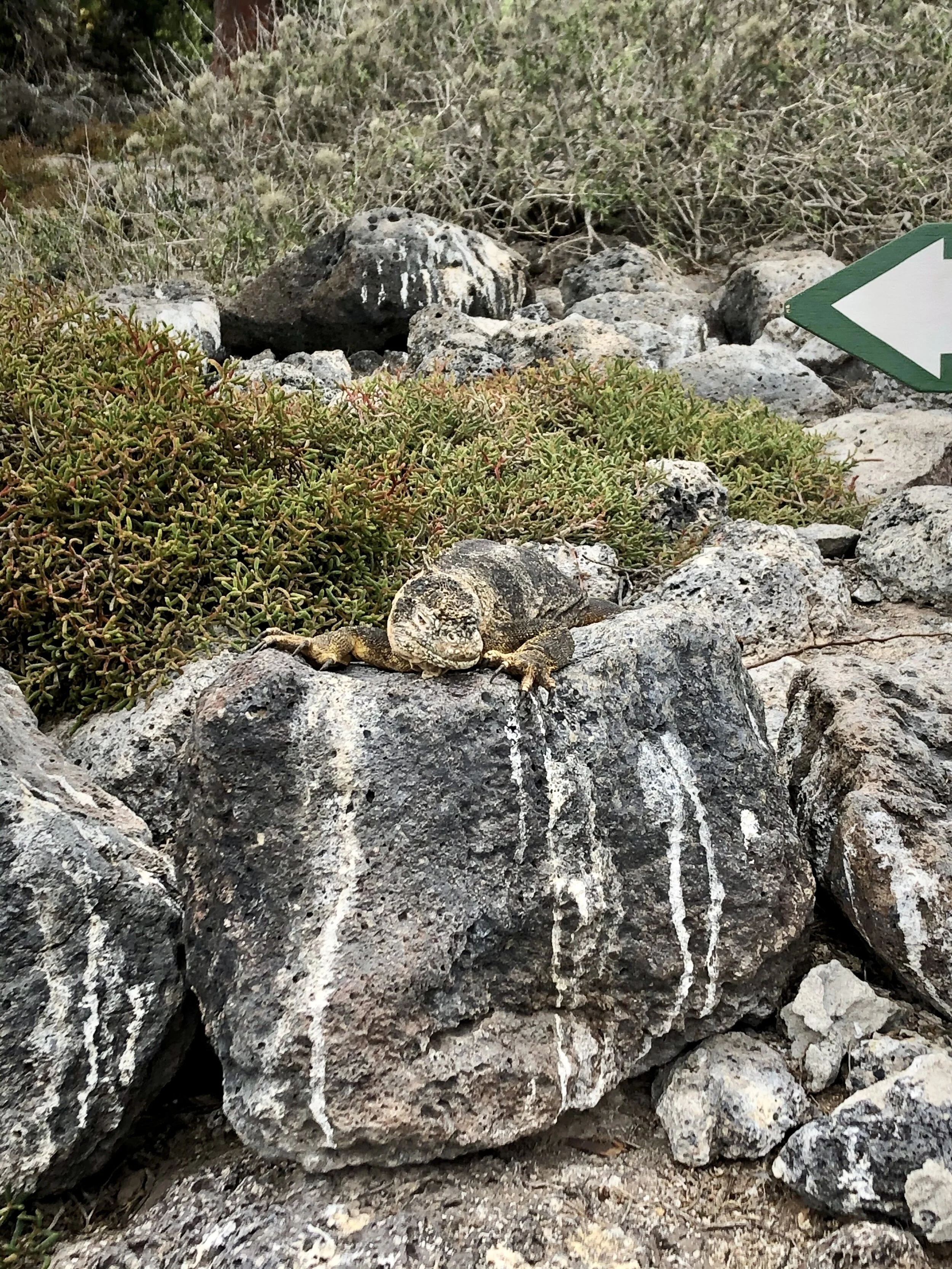


The top left image shows a number of land iguana burrows. During his voyage to the Galápagos, Darwin wrote,
We could not for some time find a spot free from their burrows on which to pitch our single tent. (Darwin, 1839, “Voyage of the Beagle”)

A project by researchers and volunteers from the Darwin Research Institute. They are attempting to grow a field prickly pear cacti, which used to be abundant on this island. The cacti are vulnerable until a certain age, which is why there are cages around them to prevent predation by land iguanas.


Oh, and remember that owl from the previous Galápagos birds post? The Galápagos short-eared owl (Asio flammeus ssp. galapagoensis) staring into your soul?

Well, you can tell when one has been around when you see wings of other birds on the ground. Almost as though the body disappeared and left the wings perfectly in place. They grab their prey, typically an unsuspecting shearwater bird, and devour everything but the wings, as shown below.


Galápagos: Isla San Cristóbal
Now that I have the time, I am going to start a series of posts from the Galápagos tour, which was back in January!
—
Upon arrival to the San Cristóbal Airport near Puerto Baquerizo Moreno (the capital of the Galápagos) on the Isla de San Cristóbal, we met our guide Paola and were shuttled to the dock, hopped on a dinghy, and scuttled to our home for the next week: Archipel II (yes, there is an Archipel I, but it’s just “Archipel”). It was a lovely little catamaran that housed about 15 of us at a time, plus the crew. We all came from North America or Europe. And most others had excellent cameras, including Athene Blakeman, whose photos I will mention when I post them but it’s probably going to be quite obvious.
Like this one, the Galápagos yellow warbler (Setophaga petechia aureola), taken by Athene:


The flight into Isla San Cristóbal. This is the northeast side of the island.

My bunk on the boat!

A view of the bay of Puerto Baquerizo Moreno.

sunset

The top deck! Many naps were had here.

Lava lizard! Get ready to see a lot of these cuties. Photo by Athene Blakeman.

Galápagos sea lion swimming! Photo by Athene Blakeman.









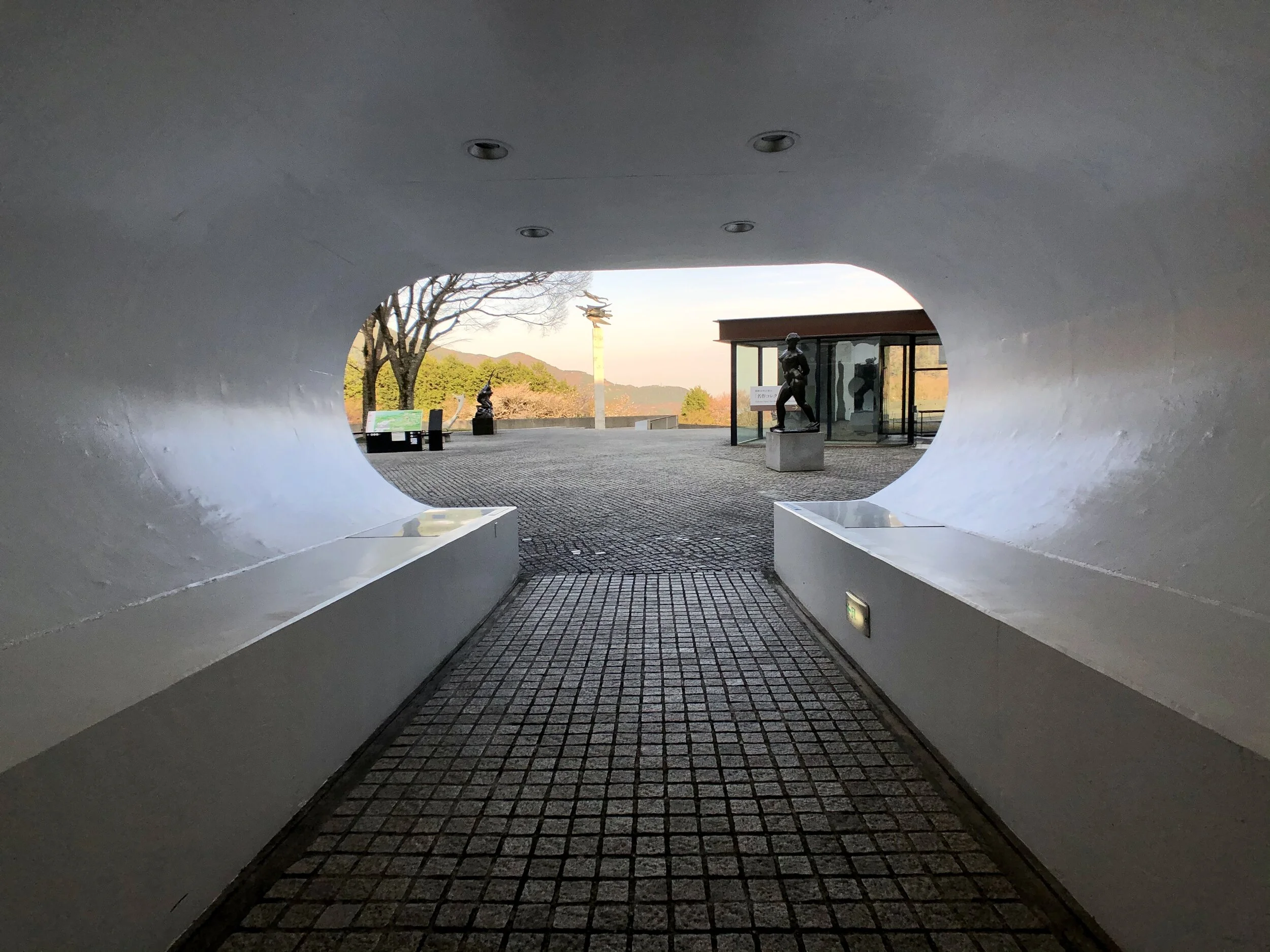

The Philosopher’s Path
My day in Kyoto began with an appropriately themed Buddha Bowl from Veg Out, a delicious vegan/vegetarian restaurant with a view of the Kamo River.

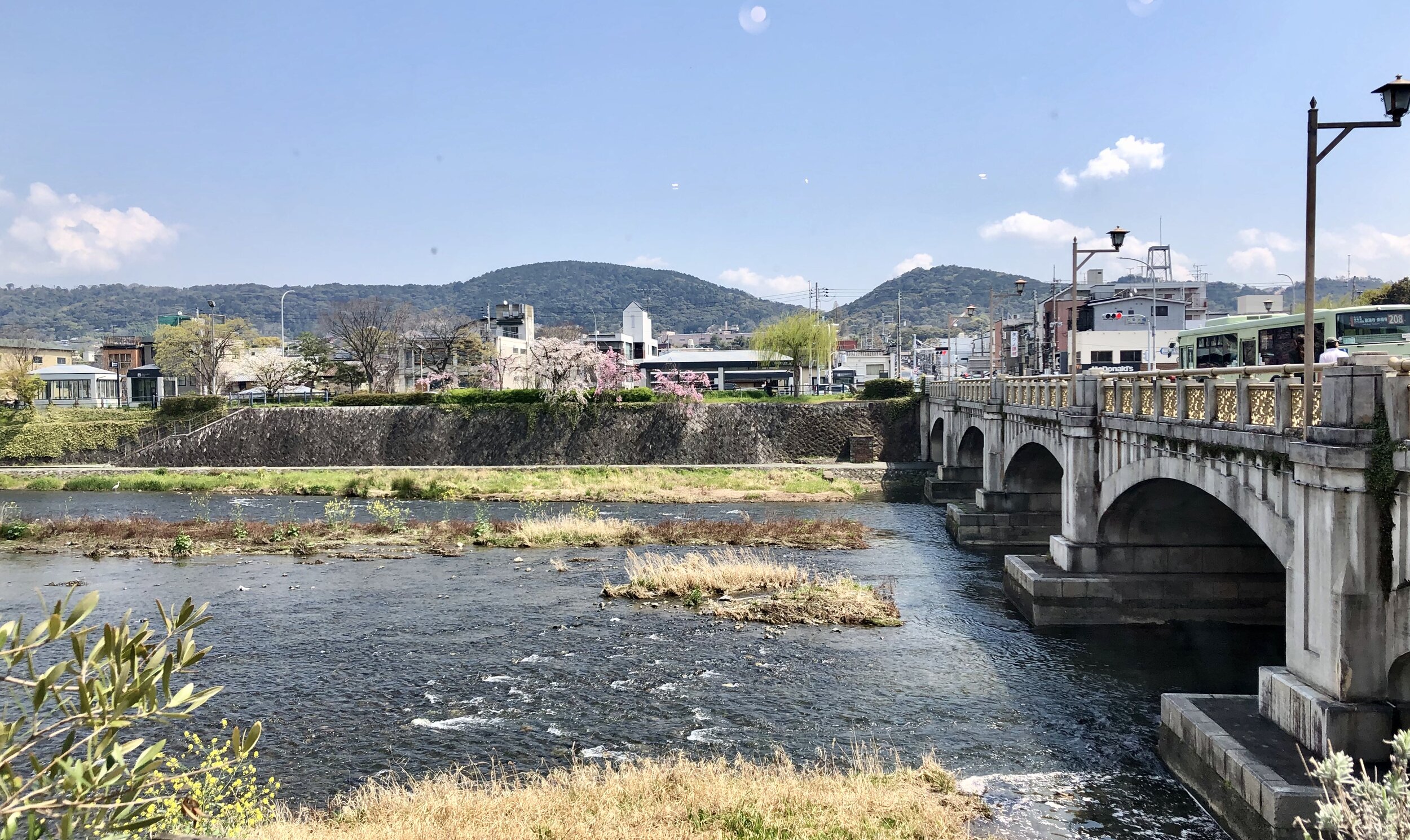
view from the table at Veg Out
Nanzen-ji Zen Buddhism Temple: image of the main gate, or “sannon,” above. The original gate was built in 1296, but burned down and was reconstructed in 1628!


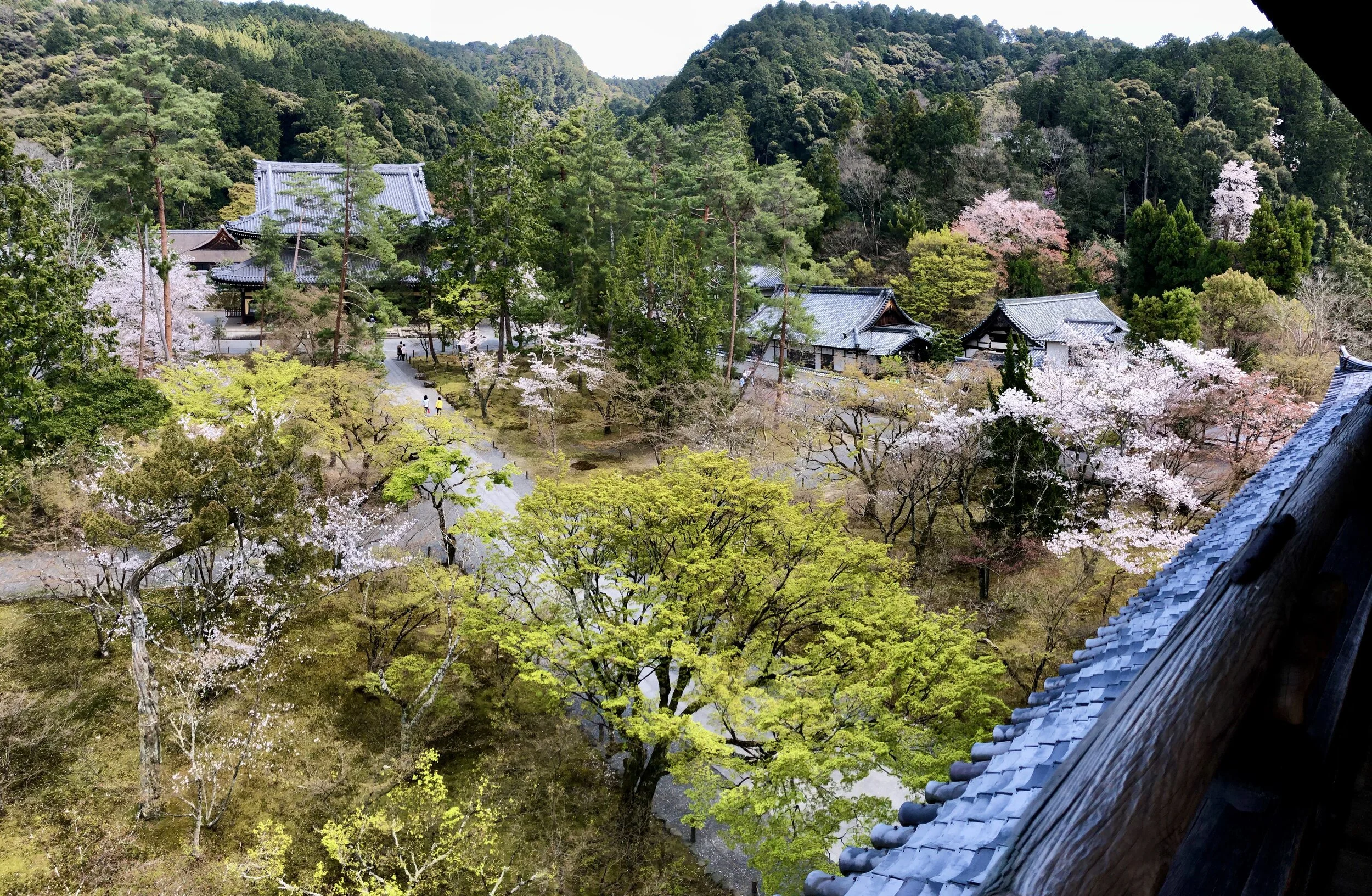


On the path to the waterfall shrine: Nanzen-ji oku-no-in.


The beginning of the Philosopher’s Path (Tetsugaku No Michi), so named because a well-known philosopher from the University of Kyoto, Nishida Kitaro, (one who helped begin the Kyoto school of philosophy) walked this path each day along the canal. In spring, the famous cherry blossom (sakura) are in full bloom. The entire path is only 2km, but it’s easy to spend hours here, staring and strolling.


Artist on bridge. I purchased an excellent sketching of his:


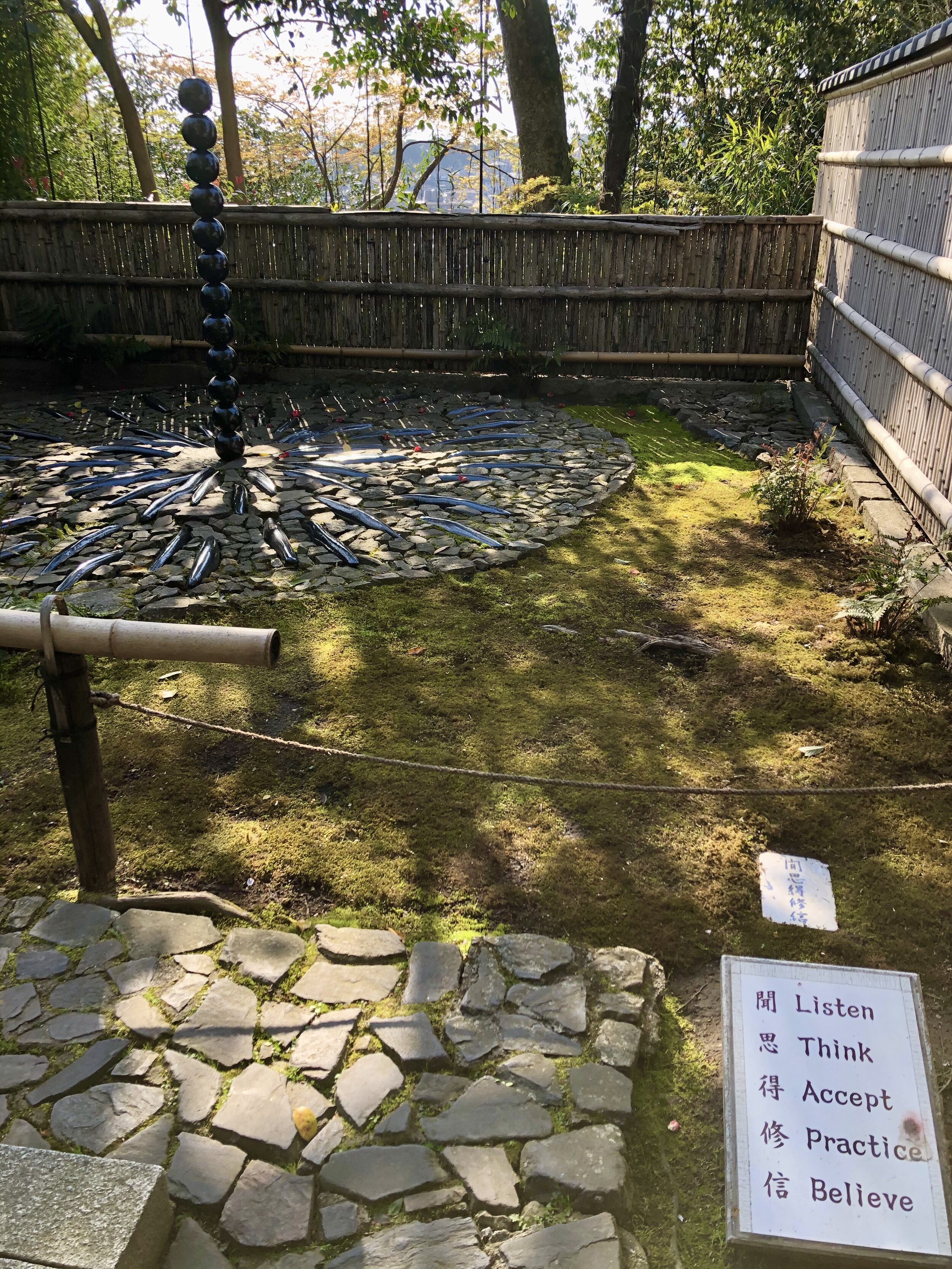


Kanazawa
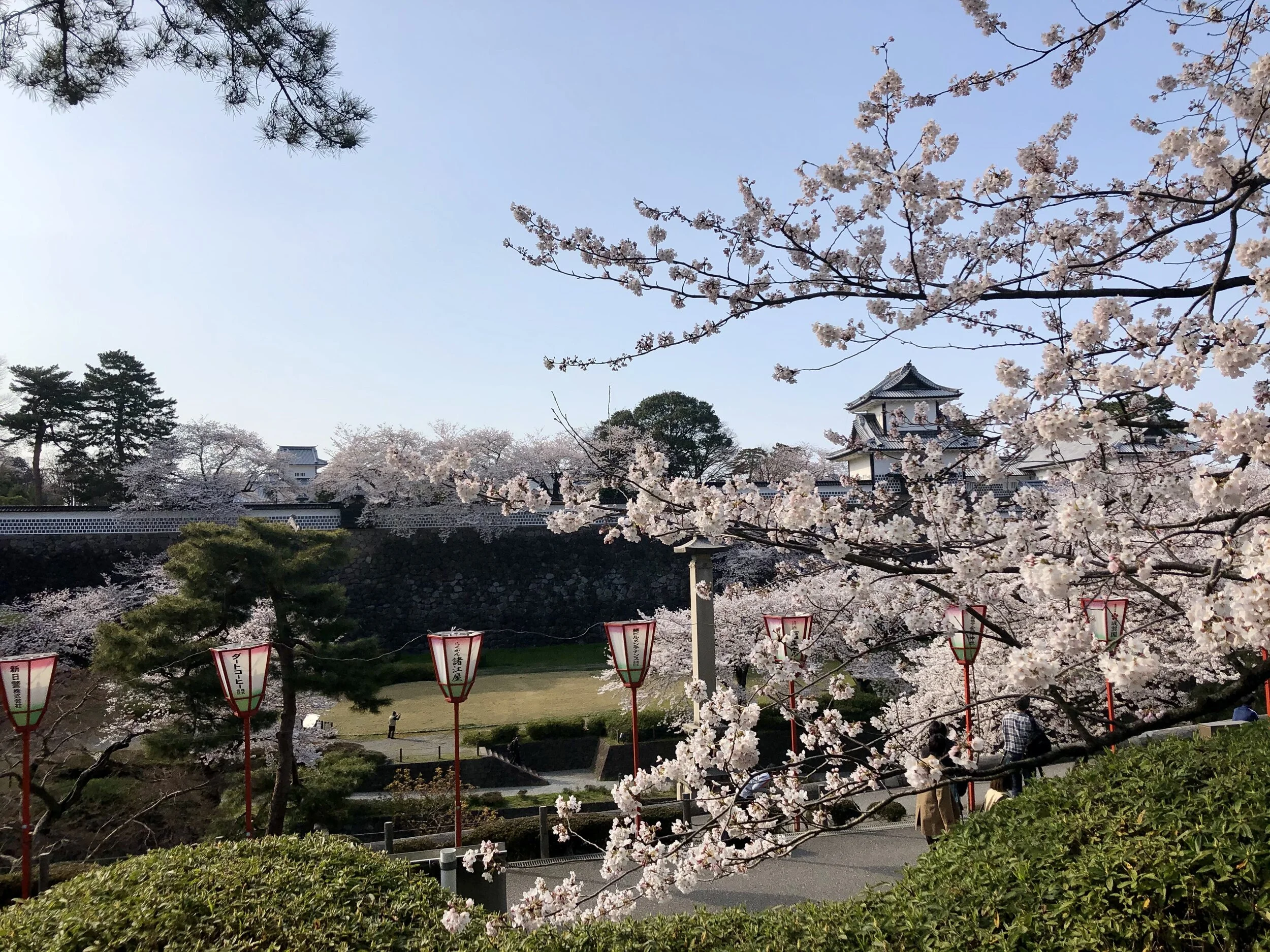
Kyoto has been a great central location for the past week, as it is a relatively quick ride to many other areas nearby. One of those places is Kanazawa, a town on the Sea of Japan. Kanazawa was amazing, and in my opinion, an underrated city (similar to Dunedin in New Zealand in its relative under-ratedness). (Ishikawa in the map below is where Kanazawa is — Ishikawa is the name of the prefecture).